Thailand · Choosing your base
Jomtien or Hua Hin for One Month Without a Car?
How Travel with Edit is funded: Read the disclosure.
Jump to the decision →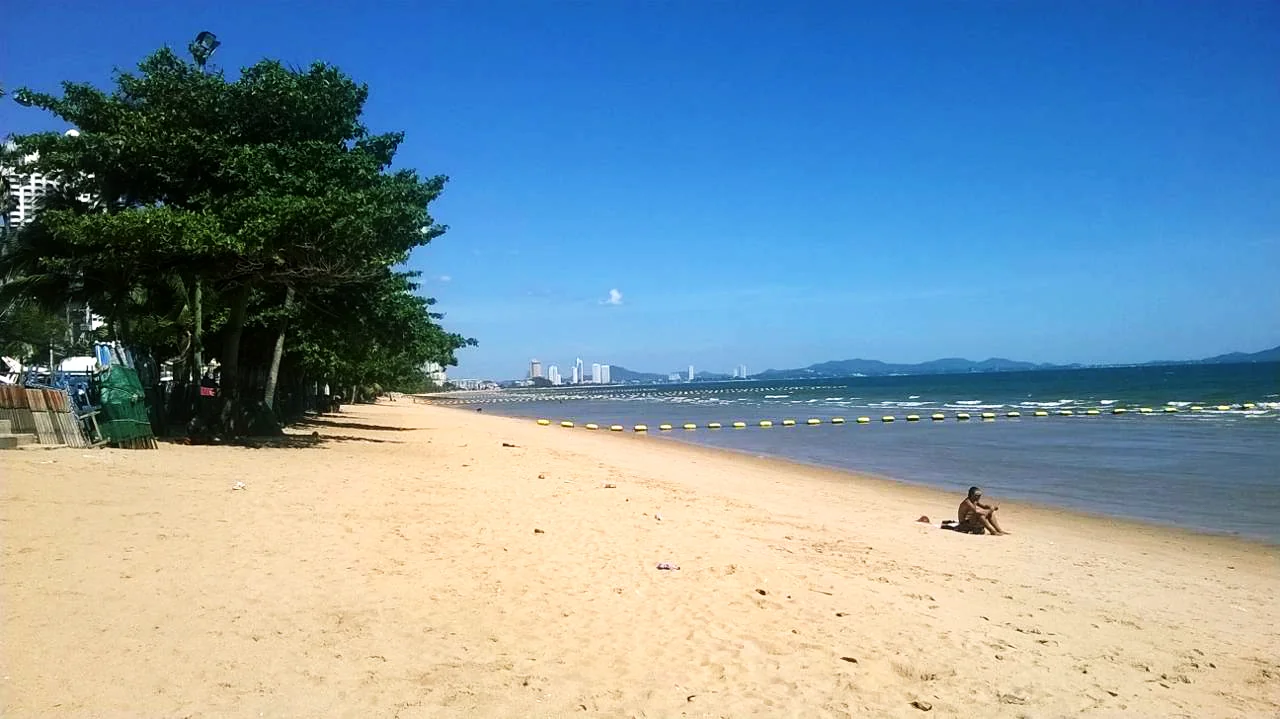
At the end of a long flight, the sea may be all you want to see. A week later, the questions change. Where do you buy breakfast? How do you get home after dinner? Does the road outside your flat have a pavement, or do you need a taxi every time you leave?
For a month without a car, I would look at Jomtien first if easy access to Pattaya matters. I would start with central Hua Hin if I wanted a small-town routine, markets and evenings close to home. But I would reverse either choice for a better-positioned flat. The details below explain why.
The short answer: which would suit your kind of month?
Choose Jomtien as your starting point if you want a beach base with Pattaya’s larger shopping and service area within reach, and you do not mind using a shared pick-up truck or occasional taxi. Focus your property search on the established northern Jomtien Beach and Dongtan area, rather than assuming anything advertised as “Jomtien” is equally convenient.
Choose central Hua Hin first if you prefer a town with a recognisable centre, places to eat, market evenings and fewer reasons to travel across a large urban area. Start by looking around the central streets near the Night Market and ordinary shops. Do not confuse a central flat with a secluded villa that happens to have a Hua Hin postal address.
Neither place wins on rental price alone. For someone travelling without a car, a small difference in rent can be swallowed by the cost of rides — and by the frustration of planning every errand around one.
Jomtien: start with the route you will use most often
Jomtien Beach Road runs along a long stretch of coast south of Pattaya. Near the northern end, Dongtan Beach and the Thappraya Road approach give you useful points of reference. Accommodation close to these areas may put beach walks, food and transport within a manageable daily circuit. The word “may” matters: two flats with the same area label can sit on very different streets.
Songthaews, locally known as baht buses, operate along the Jomtien–Pattaya corridor. They are shared pick-up trucks, not a European-style bus service with guaranteed stops and accessible boarding. Expect a step up into the vehicle and check the route and fare before using it. A taxi or booked car is a sensible alternative if you have luggage or prefer door-to-door travel.
A realistic first-day trial: ask your host to show you the route from the exact building entrance towards Thappraya Road and the Dongtan Beach approach. Check where you could buy milk, fruit or a simple meal without crossing several busy lanes. Continue only as far along the seafront as you feel comfortable, then take the same route home. Before treating it as your daily walk, confirm shade, road crossings, seats and any usable toilets in person; these facilities are not guaranteed at every point.
An active alternative: on a separate day, try the shared-transport journey towards South Pattaya. Do the full return trip, not just the outward ride, so you know where to wait, how you will signal to get off and what your taxi backup would cost. There is no prize for doing it on the first afternoon after an overnight flight.
Where I would be more cautious: far-south developments and properties marketed as Na Jomtien can be appealing but may involve more hired journeys. Pratumnak has attractive locations, yet some connecting streets slope enough to make the return walk unpleasant in the heat. None of these places is a bad choice in itself. They simply need a more careful address-by-address test.
Hua Hin: build your month around its centre
Hua Hin offers a different sort of day. Its central shopping streets and Night Market can suit someone who likes to go out briefly, return to the flat and venture out again for dinner. The Night Market is on Dechanuchit Road, close to Phet Kasem Road. That gives you a real landmark when checking accommodation, not a promise that every nearby street is easy to walk.
A gentle central-Hua-Hin trial: choose a prospective flat, mark its entrance and the Dechanuchit Road market area on a map, and identify one daytime food shop and pharmacy. In the afternoon, walk only the portion that feels comfortable. Later, try the evening-market approach if it is open on your date. Note the crossing of Phet Kasem Road, where you can sit down, and whether returning after dark feels straightforward. If the crossing or lighting is wrong for you, make a different short route or plan a car ride.
A more active alternative: take an outing to the railway-station area or another central landmark on a separate morning. Do not try to combine every attraction in one outing. Return to your accommodation, rest and go out again later if you feel like it.
Nong Kae and Khao Takiab are worth looking at if you prioritise a quieter environment, but judge the individual address carefully. Do not book an outlying villa on the assumption that local shared transport will operate late in the evening or stop outside the gate.
The four checks I would make before paying a deposit
- Your ordinary errands. Find one real grocery shop, one pharmacy, and a place you would enjoy sitting with a drink. Follow the route from your actual entrance, not the centre of a map pin.
- The return after dark. Check lighting, crossing points, the building gate and what you will do if you are tired or it rains. Make sure you can book a car without relying on a stranger outside a tourist attraction.
- The journey with a suitcase. A lift listed in an advert does not guarantee step-free access from the street. Ask for a recent continuous video from the drop-off point to the apartment door.
- Your backup day. If you do not want to walk in heavy rain or midday heat, can you still buy food, stay comfortable indoors and leave the building without difficulty?
If you prefer shorter walks, plan a relaxed route; if you like to explore on foot, choose a longer route with easy ways to return. Age alone does not determine which plan you need.
What a one-month budget comparison should actually look like
Monthly adverts are hard to compare: electricity may be charged separately, a deposit may require substantial cash upfront, and a distant flat can add regular taxi costs. Also confirm that the property is lawfully offered for your exact length of stay.
For each address, request a written quote for the same dates and number of guests. Record rent, electricity, water, internet, cleaning, any non-refundable charges and the likely cost of the local journeys you expect to make. Keep a refundable deposit in a separate “cash needed” line unless the written terms say it will not be returned. Compare the totals only after both hosts have answered the same questions.
Rent + utilities + cleaning and non-refundable fees + planned local transport. This is a comparison of the items you enter, not a claim about typical prices in either town. If a host will not confirm a charge or your transport cost is not yet known, mark it “unknown” and keep a separate contingency rather than filling the gap with an invented estimate.
Set aside any accommodation deposit as money you must have available. Depending on the agreement and the condition of the property, some or all of it may be returned at the end of your stay; keep it separate from your expected trip costs. Travel insurance is different: include the premium as an expense, alongside flights, food, local transport, activities and an emergency allowance. Compare written quotes for your actual dates rather than relying on an old “average monthly cost” from a travel forum.
Weather and the small comforts that matter
The season changes the calculation. An October stay can involve wetter days, while December and January often suit travellers seeking more outdoor time. Climate patterns are not promises about any particular week. Use the Thai Meteorological Department for conditions around your dates and ask a host how the entrance and nearby roads cope with heavy rain.
Do not plan every afternoon around a long walk in tropical heat. A shaded morning outing, a comfortable room at midday and a separate evening excursion can be more enjoyable — and leave time for a genuinely active day when you want one. Ask about air conditioning, mosquito screens, noise and the condition of the actual building rather than a model apartment.
Arrival: bus, onward ride and the 2026 entry change
Suvarnabhumi Airport’s official transport information lists Roong Reuang Coach services to Pattaya and Hua Hin. It describes one checked bag up to 20 kg and one personal bag in the standard allowance, subject to operator terms. Neither coach is automatically a ride to your apartment door. Before buying a ticket, check your arrival time, the current timetable, the final stop and how you will complete the last leg. You can compare the options in our guide to Bangkok Airport to Pattaya or Jomtien.
Important for an approximately one-month visit: Thailand replaced the former general 60-day visa-exemption arrangement on 15 September 2026 with nationality-dependent entry categories. The Royal Thai Embassy’s current eligibility list includes ordinary Hungarian and UK passports among those eligible for a tourism stay of up to 30 days; other passports and travel purposes can have different rules. A booking for 30 nights is not the same as permission to stay for 30 days. Before making a non-refundable booking, confirm the permitted stay and date calculation for your passport and itinerary in the current Royal Thai Embassy visa-exemption list. Confirm eligibility again for your passport and travel dates.
Most foreign travellers entering Thailand must submit the free Thailand Digital Arrival Card within the official window of no more than three days before arrival. The TDAC is not a visa. Use the official Thai Immigration TDAC site, not a paid copycat service. Recheck entry conditions shortly before travelling.
The simple way I would choose
I would choose a well-located Jomtien flat over an isolated Hua Hin house if I wanted Pattaya services on hand and did not mind occasional shared transport. I would choose a central Hua Hin flat over a remote Jomtien bargain if I wanted most evenings within my own neighbourhood.
Before paying, put the two real addresses on the table. Test the grocery run, evening return, luggage route and total monthly cost. If one property fails two of those four checks, leave it off the shortlist however appealing the photographs are.
Need more than a town comparison?
Local route and accommodation-planning details checked: 20 October 2026. Passport eligibility was rechecked against the Royal Thai Embassy list on 1 November 2026. Rates, routes, accommodation rules and entry requirements can change; check them again before travel.
Sources for the changing details
Royal Thai Embassy – current visa-exemption categories (updated 16 September 2026)
Thailand Digital Arrival Card (Thai Immigration)
Suvarnabhumi Airport – Roong Reuang Coach
Roong Reuang Coach – current luggage allowance and service terms