Albania · Historic town
Gjirokastra, Albania: The Stone City Worth Slowing Down For
Explore Gjirokastra’s stone houses, castle and steep lanes, with practical choices for a rewarding visit without rushing.
No commissioned booking links in this feature. Prices, opening hours, access and official travel advice can change. Check the linked sources for your dates. About recommendations.
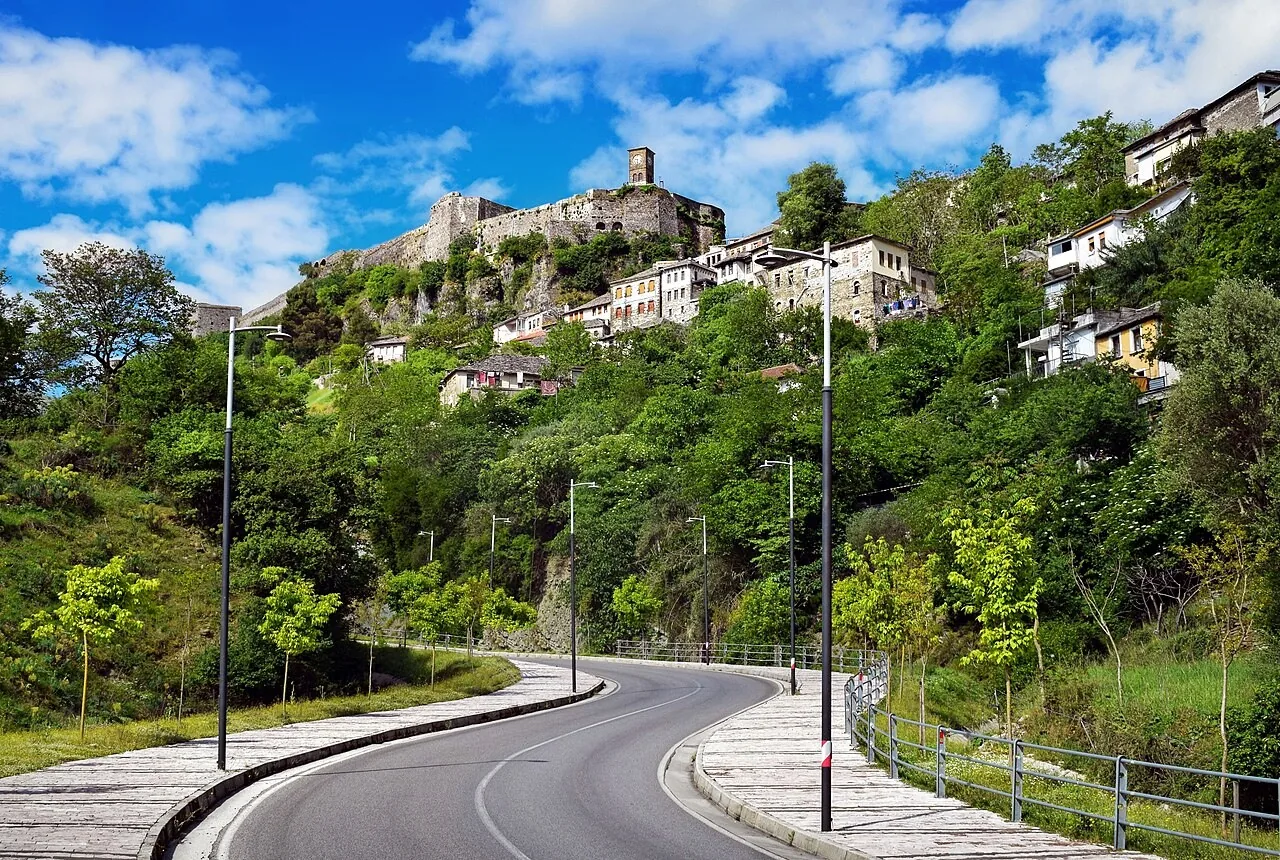
In Gjirokastra, it is often the small details that catch your eye first: a doorway cut into stone, a wooden balcony above the lane, a street that bends and suddenly opens towards the mountains.
A few streets can take longer than expected here—not because of the distance, but because of the slopes and the details worth noticing.
Known as the City of Stone, it rises above the Drino Valley, with historic houses climbing the hillside beneath an imposing castle.
Its historic centre is part of the UNESCO World Heritage property officially named 'Historic Centres of Berat and Gjirokastra', recognised for its exceptional traditional architecture and cultural history.
Why is Gjirokastra different?
Look closely at the houses. Many have grey stone roofs, thick walls and distinctive upper floors.
These were not simply decorative buildings. They were family homes designed around the needs, traditions and social structures of their time.
Some surviving houses date from the 17th century, while others represent later developments in Ottoman-period architecture.
A useful way to read the architecture is to compare the exterior with the rooms inside a museum house. From the street, notice the heavy stone roof and the upper floors; indoors, look for the distinction between everyday family space and rooms intended for guests. The Albanian National Tourism Agency describes these houses as both homes and expressions of social life. This gives you a specific question to take into a house visit: what does the building reveal that a photograph of its façade cannot?
Together, they create a townscape that feels remarkably different from the coastal resorts often associated with Albania.
Three experiences worth making time for
Explore the Old Bazaar
Start in the Old Bazaar, where the streets give you a feel for the town before you decide which sights to pay to enter.
Craft shops and souvenir stalls line the narrow lanes, but the buildings and the streets between them are at least as interesting as the goods on display.
Notice how the stone-fronted shops fit into the hillside and how quickly the busy lanes give way to quieter corners.
There is no need to turn the bazaar into a shopping checklist. A slow wander costs nothing and may be the part you remember best.
Discover Gjirokastra Castle
High above the historic centre, Gjirokastra Castle is one of the city's defining landmarks.
It offers broad views across the town and the Drino Valley, as well as an opportunity to understand the area's layered history.
The views are a strong reason to visit the castle. Getting there, however, can be harder work than the photographs suggest.
If steep cobbles are a concern, find out how close a taxi can get before setting off uphill.
Check the castle opening day before climbing. The regional heritage directorate currently lists 1 October–30 April opening as Tuesday–Saturday 09:00–16:00, Sunday 09:00–14:00, with Mondays closed. Its published summer timetable is 1 May–30 September, 09:00–19:00. A separate local visitor page gives different hours, so treat the directorate as the primary reference and reconfirm before travelling. If the castle is closed, spend your time in the bazaar and consider a historic house only after checking that house’s own opening arrangements. Do not climb uphill on the assumption that the castle gate will be open.
Visit a traditional house
Gjirokastra's historic houses are among its greatest treasures.
The Skënduli House and the Ethnographic Museum are two places associated with the city's architectural heritage.
A house visit can reveal details that are easy to miss from outside: room layouts, carved woodwork and the way families once organised their domestic lives.
If you are choosing just one admission, do not treat the castle and a house museum as interchangeable. The castle is the stronger choice for a broad view of the valley and the city’s defensive setting; a house museum is better for understanding domestic architecture at close range. This comparison reflects the different experiences described by the national tourism agency, not a claim about current ticket prices or accessibility.
Check current admission arrangements before visiting.
Is Gjirokastra suitable for a relaxed trip?
It can be, but only if your route, transport and accommodation fit the steep terrain. The old town is not an easy, level stroll.
This is a hillside town, not a flat pedestrian destination. Cobbled streets, slopes and uneven surfaces are part of its historic character.
A slower itinerary makes more sense than trying to visit every attraction in a single afternoon.
Accommodation is part of the route plan here. Before booking, ask the host where a taxi can stop, how many steps remain to the entrance, and whether you must carry luggage along cobbles. Compare that answer with the room price—not just the distance shown on a map.
For a half-day visit, make one paid heritage stop your anchor. Choose the castle if you want the wider landscape and a sense of the town's defensive history; choose a historic house if you are more interested in how families lived. Add the Old Bazaar only if the remaining slopes and cobbles suit your pace. This is a suggested route, not a claim that all attractions share the same opening hours.
How to spend less without missing the experience
You can enjoy much of Gjirokastra without paying for a string of attractions.
The lanes, rooftops and views are part of the experience, not simply the walk between ticketed sights.
However, some heritage sites charge admission, and local transport or taxis may be worth paying for when they reduce difficult uphill walking.
Decide in advance what matters most: one admission, a taxi that avoids the steepest approach, or a room close to where your transport can stop. The cheapest room on a map may cost more in effort or an extra taxi ride. Verify current admission prices with the attraction; older local pages still display prices that should not be treated as a current quotation.
Choose your visit by what you want to remember
Architecture without a strenuous schedule: start at the Old Bazaar and study three details before deciding whether to go farther: the stone roofline, the narrow openings in the tower houses, and the way the streets climb towards the castle. The Albanian National Tourism Agency identifies the bazaar and tower houses as key parts of the historic city. This short, flexible observation exercise is an editorial suggestion, not a measured accessible route; turn back whenever the slope or paving becomes uncomfortable.
One meaningful interior: choose a house museum if you want to see how a traditional home worked. Look for the contrast between the ground-floor work or storage areas and the upper reception rooms. The national tourism agency documents these different uses in Gjirokastra’s stone houses. Check that the particular house is open and ask about stairs before paying; do not assume that a historic interior is step-free.
The big landscape: make the castle your one major paid stop only if the approach and interior walking suit you. If not, the bazaar-and-houses perspective is a valid visit in its own right, not a failed attempt to reach the highest point. Confirm opening days and any practical taxi drop-off point locally; a map pin does not establish a step-free entrance.
What to do if the plan changes
Rain makes polished stone and steep lanes less forgiving. Reduce the route to one nearby indoor stop only if it is open and safely reachable, or choose a café and return when the streets are drier. In strong heat, move the steepest section to a cooler part of the day and plan a seated break before the return journey.
If you have already walked further uphill than expected, do not keep climbing simply because the castle looks close. Stop, reassess the descent, and ask about a safe pickup point. The most useful budget decision may be to spend on the return ride rather than an extra ticket.
Before you leave: verify the specific house or castle opening day, ticket conditions, current local transport options and the walking route from the actual drop-off point. The UNESCO listing establishes heritage significance, not today’s access arrangements.
Gjirokastra is not a destination to rush through with a checklist.
Its real attraction is the opportunity to experience a distinctive historic city, understand how people lived there and enjoy an environment shaped by centuries of local history.
For travellers drawn to architecture and everyday history, Gjirokastra offers something more memorable than a race between attractions: the chance to notice how a hillside city was built, lived in and changed over time.
Travel with Edit — See More of the World. Spend Less.
Official sources:
UNESCO World Heritage Centre: https://whc.unesco.org/en/list/569/
Albanian National Tourism Agency: https://www.akt.gov.al/en/cities/gjirokaster/
Albanian National Tourism Agency – Gjirokastra Castle: https://akt.gov.al/en/atraksionet/kalaja-e-gjirokastres/
Albanian National Tourism Agency – The stone houses of Gjirokastra and Berat: https://akt.gov.al/en/simbolet/shtepite-me-gur-te-gjirokastres-dhe-beratit/
Source review: 11 November 2026. Opening times are published schedules, not live availability; reconfirm with the operator before travel.
Additional local source checks
Regional Directorate of Cultural Heritage, Gjirokastra – castle opening hours and ticket rules: https://drtkgjirokaster.com/oraret-dhe-biletaria-kala/
Gjirokastra visitor information (conflicting timetable; not used as primary): https://gjirokastra.org/gjirokastra/the-castle/