Greece · Cultural landscape
Meteora, Greece: Monasteries in the Sky — and How to Visit Without Rushing
Plan a Meteora visit with clear choices about monastery stairs, opening days, transport and your time and budget.
No commissioned booking links in this feature. Prices, opening hours, access and official travel advice can change. Check the linked sources for your dates. About recommendations.
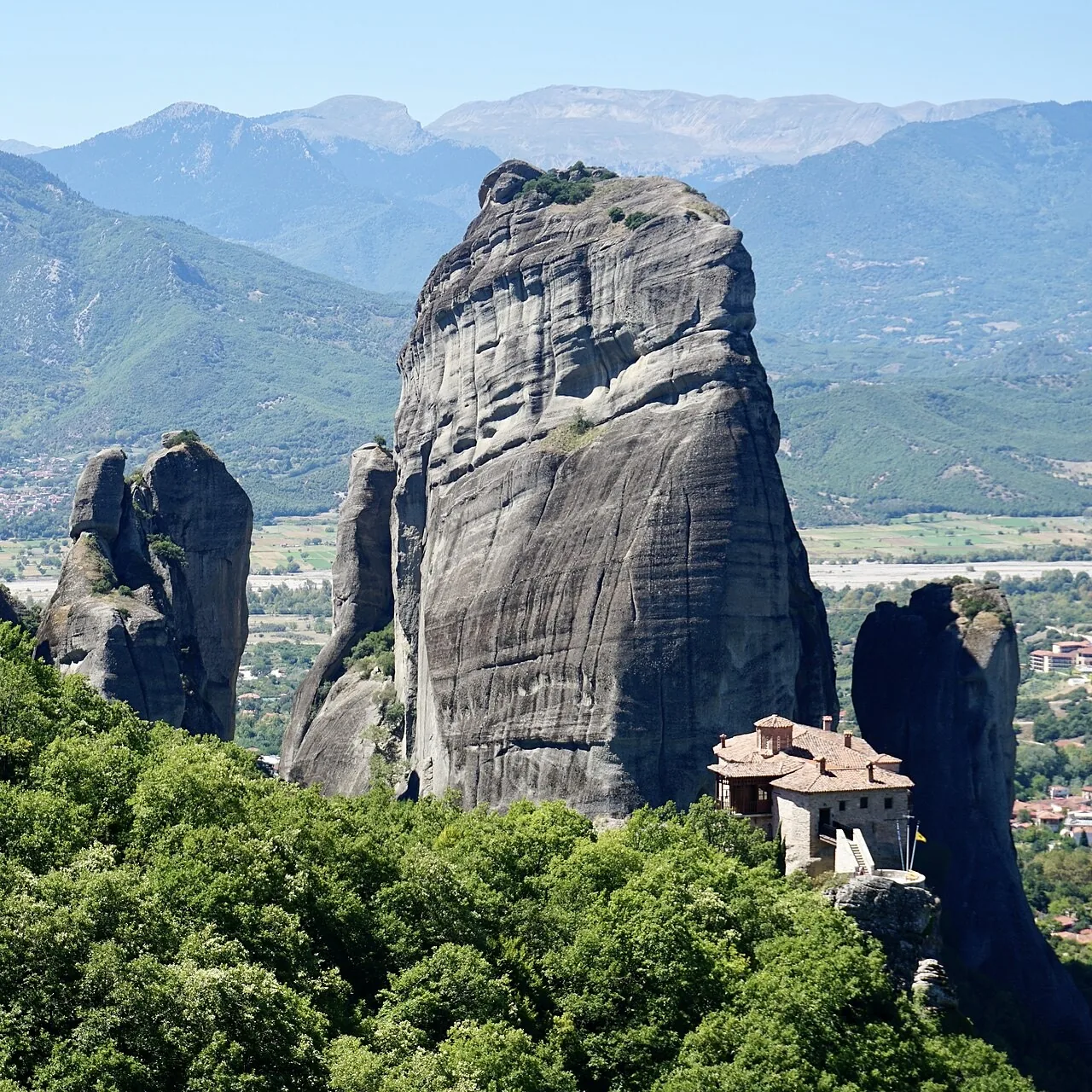
Six active monasteries, extraordinary rock formations and some demanding staircases. Public visiting arrangements differ by monastery and date. Here is how to choose a visit without rushing.
From the plain below, Meteora looks almost impossible.
Above Kalambaka, sheer sandstone pillars rise from the plain. Monasteries perch on their summits, so improbably placed that the first glimpse can feel like a trick of perspective.
The surprise is not simply their position. Meteora is still a place of worship, with six monasteries open to visitors under arrangements that can change through the year.
Visiting them requires a little more thought than simply following a map.
The view from the road hides a practical complication: some entrances involve long flights of steps, opening days differ and the road between nearby-looking buildings can wind a surprisingly long way.
Fortunately, seeing Meteora well does not mean collecting six entrance tickets.
Why Were Monasteries Built Here?
The cliffs offered generations of monks the solitude they sought. Building places of worship so high above the plain also meant solving an extraordinary problem: how to carry people, food and building materials up the rock.
Monastic life developed here over centuries. The surviving buildings preserve churches, religious art and evidence of the extraordinary effort once required to move people and supplies up the cliffs.
The landscape and its monasteries form a UNESCO World Heritage Site. Greece’s official tourism portal describes six monasteries as operating today, while UNESCO’s heritage description specifically names four as housing resident religious communities. These descriptions use different criteria; neither guarantees public access on a particular day.
That tension between an uncompromising landscape and human persistence is part of what makes Meteora linger in the memory.
Which Monastery Should You Choose?
The six operating monasteries are not interchangeable. Access routes, visitor opening days, religious practices and physical demands differ. Verify which monastery is admitting visitors before you travel.
Great Meteoron — for history and scale
The largest monastery is a strong choice for visitors particularly interested in monastic history, historic buildings and collections.
However, reaching it involves considerable climbing. It is not the easiest choice for someone who struggles with stairs.
Varlaam — for architecture and religious art
Varlaam offers an impressive setting and historic interiors. It also involves stairs and should not be treated as an easy-access alternative.
Rousanou — for its dramatic position
Rousanou appears to grow directly from the rock beneath it. It is especially striking from surrounding viewpoints.
Entering the monastery involves climbing, so enjoying the exterior view may be the better option for some visitors.
St Nicholas Anapafsas — for frescoes
This relatively compact monastery is particularly interesting for its religious paintings, including works associated with Theophanes the Cretan.
Its vertical layout and stairs make it less suitable for visitors who need to avoid climbing.
Holy Trinity — for the setting and the challenge
Holy Trinity occupies one of Meteora's most dramatic positions.
Greece's official tourism portal describes 149 steps leading to the monastery entrance. Other visitor guides describe a longer and more demanding approach, including the access path.
Whichever count is used, the important point is that visiting requires a significant physical effort.
Choose it only if you are comfortable with the approach and the climb.
St Stephen — for easier access from the road
St Stephen is connected to the road by a bridge, avoiding the major external stair climb required at several other monasteries.
This makes it the first monastery worth investigating if you want to reduce physical effort.
However, bridge access does not guarantee that every part of the monastery is wheelchair accessible or step-free.
A Better Way to Plan Your Day
Start by choosing one monastery you particularly want to enter.
Then choose a second as an alternative, taking account of opening arrangements, transport and physical effort.
A day with one monastery interior, a couple of safe viewpoints and an unhurried lunch can feel far richer than a race around every entrance.
Trying to visit all six can mean spending much of the day travelling between entrances, climbing stairs and checking the clock.
If the steps look daunting, there is no need to force the issue: the landscape is the main attraction, and much of it can be admired from designated viewpoints.
The Views Are an Experience in Their Own Right
Some of the finest views are outside the monastery gates. That matters if you are short of time, travelling on a budget or simply more interested in the cliffs than the interiors.
Roadside viewpoints offer striking views of the rock formations and religious buildings.
They can be particularly useful if you have limited time, prefer photography or cannot manage long staircases.
Use designated viewing areas and stay behind safety barriers. The rocks and roadside edges can be hazardous, especially in poor weather.
Getting Around Meteora
Kalambaka and nearby Kastraki are the usual bases for exploring the monasteries.
Visitors use private vehicles, taxis, organised excursions and walking routes to reach the area.
On a map, two monasteries may look like neighbours. On the ground, the road twists between rock towers and the last stretch to an entrance may still be on foot.
Roads wind around the rock formations, and some entrances require additional walking after reaching the parking area.
If you are travelling without a car, check current local transport options before arriving. A taxi or organised excursion may be worth considering if it reduces difficult walking and avoids waiting for uncertain connections.
Compare the total cost, including transport and monastery admission, before choosing a tour.
What Does It Cost?
Admission is generally charged separately at each monastery.
Recent local visitor information lists approximately €5 per adult per monastery, but this is a changing charge rather than a guaranteed price.
Bring a modest amount of cash in euros, but confirm the current admission and payment arrangements before setting out.
A simple example illustrates the budget decision:
For example, if admission is €5 per monastery on your visit date, entering two would cost €10 per adult before transport. This is an illustration, not a confirmed current tariff.
Visiting more monasteries increases both the entrance cost and the time required.
Compare the full cost of getting to an open entrance and back, not just the admission charge. Paying a little more for reliable transport can be worthwhile if it prevents a difficult climb or a wasted journey.
Opening Days Matter More Than You Might Expect
Each monastery has its own visiting arrangements.
Some close on particular weekdays, and opening times can change between summer and winter.
Published timetables are not fully consistent, even among local and national visitor-information sites. For example, published winter closing days for Varlaam and St Nicholas Anapafsas differ. Do not select a monastery or book a non-refundable transfer solely from a third-party timetable. Contact the monastery, or ask the local tourism office to confirm its opening on your exact date.
Keep a viewpoint as your fallback rather than paying for transport to a monastery that may be closed.
For a low-risk plan, confirm opening, dress requirements and payment method before leaving Kalambaka or Kastraki.
If Great Meteoron is your priority, its own website currently lists a closure from 1 to 28 February in addition to its weekly closures. For a February trip, treat the monastery as unavailable unless the monastery itself confirms otherwise; plan an alternative interior or viewpoints instead.
A second monastery should be an option, not a timetable obligation.
What Should You Wear?
Meteora's monasteries are active religious sites.
Modest clothing is expected. Visitors should cover their shoulders and follow the dress requirements displayed at each entrance.
Requirements concerning trousers and skirts may be more specific than at ordinary tourist attractions.
Check the current rules before travelling, rather than assuming that casual sightseeing clothes will be accepted.
One Day or Two?
For most travellers, one day is enough for the landscape and one or two carefully chosen interiors.
A second day earns its keep if you want several monasteries, gentler pacing or the chance to see the rocks in different light.
An overnight stay in Kalambaka or Kastraki may make the experience less rushed, but it is not essential for everyone.
Compare accommodation prices with the additional transport and time costs of a day trip before deciding.
When Meteora May Not Suit You
The scenery can be enjoyed in different ways, but not every part of Meteora is accessible.
Many monasteries have steep approaches, steps and uneven historic surfaces.
Hot weather can make climbing more tiring, while rain and wind can affect conditions around exposed viewpoints.
If you need step-free access, confirm the exact entrance and internal route rather than relying on general descriptions such as "easy access".
A visit focused on road-accessible viewpoints may be a better choice than attempting a difficult monastery climb.
Adapt the day to your needs
If you want less climbing, use designated roadside viewpoints; investigate St Stephen only after checking bridge and internal access. For religious art, select one monastery and one viewpoint rather than racing between entrances.
For a tighter budget, compare the full price of independent transport with a shared excursion or taxi, including the return journey and waiting time. The cheapest option depends on group size and services operating that day.
In rain, strong wind or poor visibility, avoid exposed photo stops. Spend time in Kalambaka or Kastraki instead and return to viewpoints only when conditions improve.
You Do Not Have to Climb Every Rock
From a distance, the monasteries look almost impossible to reach. Close up, the choices are much more ordinary: which entrance is open, how many steps can you manage and how long do you want to stay?
Make those choices first. The sense of wonder will take care of itself.
Whether you enter a monastery or simply admire the landscape from a safe viewpoint, Meteora offers something rare: a place where human history and geology are equally astonishing.
Before You Go
Use current official and local sources to confirm opening arrangements and access:
Official tourism: https://www.visitgreece.gr/en/routes/meteora-pilgrimage-between-heaven-and-earth
UNESCO: https://whc.unesco.org/en/list/455
Opening-hours information checked 11 November 2026: the published winter schedules of Visit Greece, Kalampaka.com and local visitor sites conflict on some monastery closing days. Great Meteoron publishes its own schedule and warns that it may change; its website also lists an annual 1–28 February closure. Confirm directly for the intended date before making bookings.
Great Meteoron monastery (direct visiting information): https://www.meteoromonastery.gr/en/visit/
Local visitor information: https://www.infotouristmeteora.gr/main-menu/meteora/useful-informations/
Check monastery admission, dress rules and transport separately before setting out.