Türkiye · Natural wonder
Pamukkale, Türkiye: The White Terraces That Look Like Snow
Explore Pamukkale’s white terraces and Hierapolis, with realistic advice on access, pools, walking and spending.
No commissioned booking links in this feature. Prices, opening hours, access and official travel advice can change. Check the linked sources for your dates. About recommendations.
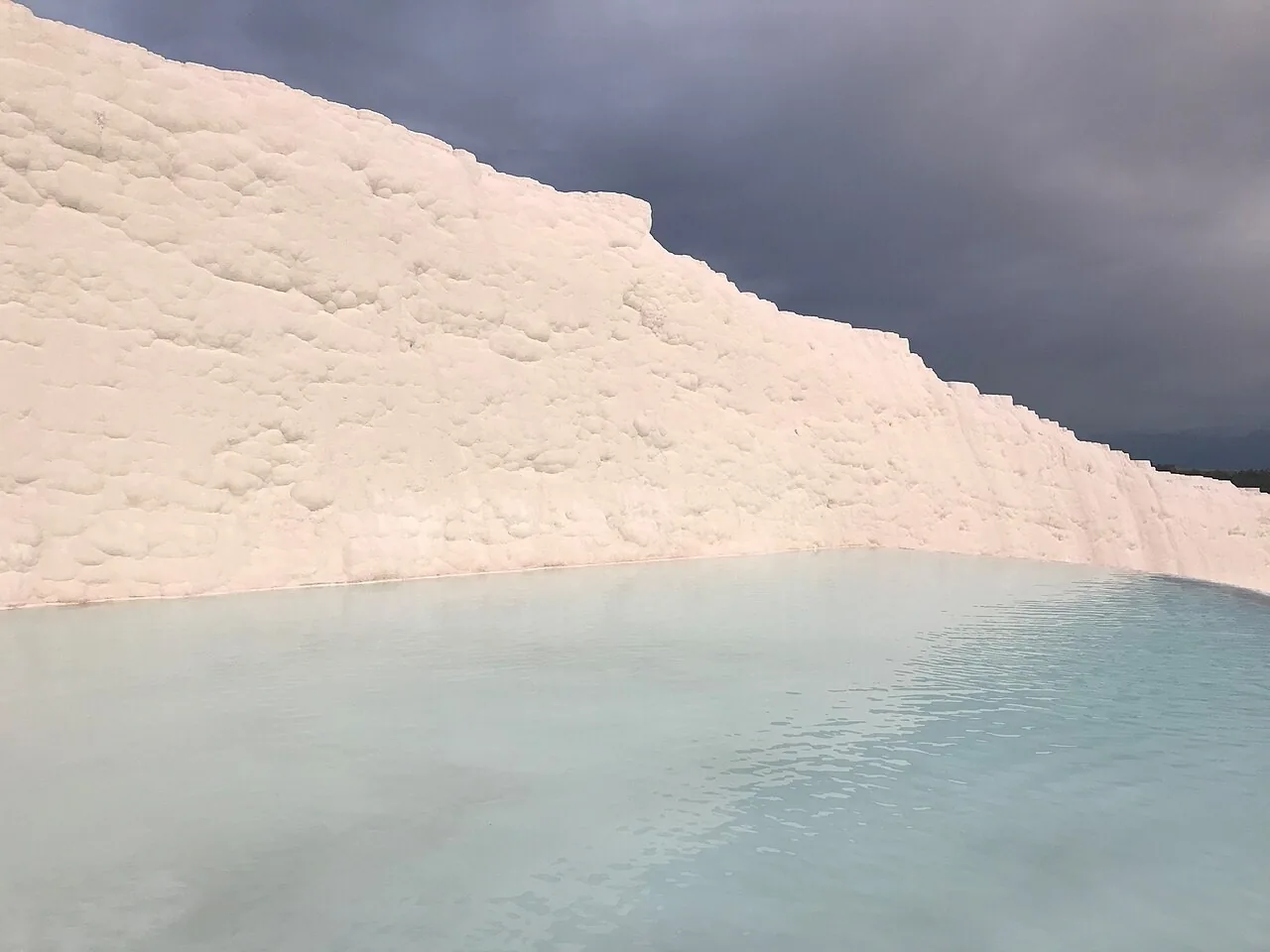
Pamukkale can look like a snow-covered hillside even in warm weather. But the white steps are not snow: mineral-rich thermal water leaves calcium carbonate behind as it flows downhill. Just above the terraces stand the ruins of Hierapolis, a city whose story was bound up with these springs.
How the terraces formed
As thermal water flows over the slope, calcium carbonate precipitates and gradually creates the white travertine. Water is managed to protect the formations, so not every basin will be full when you visit. Photographs showing bright blue water in every pool should not be treated as a promise.
What visitors may do
The white slopes are not an open-air swimming complex. UNESCO states that access to the protected travertine terraces is restricted and that designated areas have been established for bathing. Do not assume that a pool shown in a photograph is accessible on the day you visit: follow on-site signs and staff directions. The UNESCO heritage description explains the conservation principle, not today’s individual pool openings.
The ancient city above the white hillside
Hierapolis developed as a thermal centre and later flourished under Roman rule. Its theatre, baths, streets and extensive necropolis make the archaeological site a destination in its own right. The ruins cover a broad area: select the monuments that interest you rather than assuming they are all close together.
The Antique Pool is a separate decision
The Antique Pool requires a separate, same-day check. Official Turkish ministry pages currently disagree: the Hierapolis visitor page says the Antique Pool is open to visitors, while the central admission tariff still marks it closed. A Denizli provincial schedule lists pool visiting hours and admission categories. These statements do not independently prove that swimming is available on your date. Ask the site operator specifically whether entry, swimming and any separate charge are available before planning your day around the pool.
For 14 September 2026–1 May 2027, the Denizli provincial culture directorate lists the Pamukkale–Hierapolis pedestrian route as 08:00–17:00, the Archaeological Museum as 08:00–17:00, and the Antique Pool visitor facility as 08:00–17:30. The main north and south gate notice gives an 08:00 opening and an 18:00 end to daytime ticket sales, without clearly specifying the final visitor exit time. The central museum listing also displays 08:00–18:00 and says the pedestrian entrance closes at 17:00. Do not treat ticket sales, admission and exit deadlines as interchangeable; confirm your chosen gate and last entry before travelling. Important: another official Turkish Museums page publishes different seasonal entrance times. Treat the entrance-specific provincial timetable as the planning reference for the stated winter period, but confirm your intended gate and same-day admission directly before setting out.
Choose one main reason to visit
If the white terraces are your priority, plan around the permitted walking area and allow time to remove and carry your shoes. If you care more about Roman history, choose a manageable section of Hierapolis rather than trying to cover the entire site. If your main aim is to swim, confirm that the Antique Pool is actually admitting swimmers before committing to the journey; being open for visits is not the same as being open for bathing.
Walking and comfort
The site includes slopes, exposed paths and archaeological surfaces. Barefoot walking may be uncomfortable for some visitors. Summer heat and limited shade can make long exploration tiring. Ask which entrance and route best fit your needs, particularly if you are travelling with luggage or find uneven ground difficult.
Getting there and budgeting
Denizli is a regional transport hub with onward connections to Pamukkale. Check the current route, departure point and return journey. Compare the total price of transport, admission and any overnight stay rather than relying on an isolated ticket price. Admission and opening hours change; verify them shortly before departure.
A two-hour decision plan: work backwards from your exit
For a short visit, choose either the permitted terrace experience or one compact archaeological highlight—not both by default. Start with the entrance you can realistically reach, allow for ticketing and the walk back, and set a firm turnaround time before exploring. If the terraces are the priority, the condition of the designated visitor area matters more than the appearance of distant basins. If history is the priority, ask which monuments are accessible from your gate rather than assuming the theatre is a quick detour.
The Archaeological Museum has its own schedule: the provincial winter timetable lists 08:00–17:00 for 14 September 2026–1 May 2027. The ministry's central tariff currently marks the museum itself as free, but that does not make entry to the wider Hierapolis archaeological site free. Verify whether you can reach the museum from your chosen entrance and whether a site ticket is required for your route.
If you have two hours, you might allow 20 minutes for entry and orientation, 30 minutes to reach and return from your chosen area, 55 minutes for either the permitted terraces or one archaeological highlight, and 15 minutes in reserve. This is a planning example, not a promise that queues, routes or access will fit that timetable.
Bring sun protection and a bag for shoes if you intend to use a permitted barefoot section. If barefoot walking, heat or uneven ground would make the visit difficult, choose a viewpoint or archaeological area that you can comfortably access instead; verify that option with the site before buying a ticket.
The cost trap: paying for a photograph you cannot recreate
Budget for the complete outing, not just a striking photograph. The Turkish ministry's central tariff currently lists €30 for foreign visitors to the Hierapolis (Pamukkale) archaeological site; the provincial schedule separately lists 600 TRY for foreign visitors aged over 12 to the Antique Pool facility, but its availability conflicts with another official closure notice. These are dated published figures, not a promise of a bookable swim. Add return transport from Denizli, local transfers, water and a contingency, and confirm charges before paying.
The deciding question is not “Will the terraces look exactly like the photograph?” but “Would I still value the geology and the ancient city if the water level or bathing access were different?” If the answer is no, postpone booking until the current conditions are clear. If the answer is yes, plan one highlight and leave room to enjoy it.
A simple go / change / skip decision
A visit is worth making when you can confirm your entrance, the route currently permitted on the terraces, the admission conditions and a comfortable return journey. If swimming remains uncertain or the walking surface is unsuitable, reshape the day around a viewpoint or a manageable part of Hierapolis. If heat, restrictions or unreliable transport would turn it into a race, postpone it. A shorter visit with a workable exit plan is better than rushing through an area you cannot safely explore.
A realistic alternative when the terraces disappoint
Some pools may be dry because the flow of water is managed for conservation. That can be disappointing if you arrived expecting the photograph on a postcard. Yet the geology is still fascinating, and Hierapolis gives the springs a human history. You do not need a perfectly water-filled terrace to understand why this place matters.
Source notes and what may change
Source and update note (13 November 2026): The provincial 14 September 2026–1 May 2027 timetable, the central museum visitor page and the ministry tariff were checked independently. Their Antique Pool status statements conflict; swimming is therefore unconfirmed. The provincial timetable and central visitor page also describe gate deadlines differently. Prices, opening hours, pool access and permitted terrace areas can change. Check the official pages shortly before visiting. The ministry museum listing checked on 13 November gives 08:00–18:00 for the site, with the pedestrian entrance closing at 17:00; the date-specific Denizli provincial schedule remains the safer source for the pedestrian route. Do not treat general gate hours as pedestrian-route hours.
A landscape still being made
The surprise of Pamukkale goes beyond its snow-white appearance. Water is still shaping the stone beside the remains of a city that grew around the same springs. Seeing both stories makes for a richer visit than chasing a single photograph.
Before you go
UNESCO: https://whc.unesco.org/en/list/485
Provincial winter visitor timetable (14 September 2026–1 May 2027): https://denizli.ktb.gov.tr/TR-353343/denizli-muze-ve-orenyeri-ziyaret-saatleri.html
Official museum visitor information: https://www.muze.gov.tr/muze-detay?DistId=PMK&SectionId=PMK01
Official ministry admission tariff (check pool status and prices): https://dosim.ktb.gov.tr/TR-218202/muze-ve-oren-yeri-ucretleri.html
Recheck hours, admission and permitted walking areas before travelling.