ABOUT THE GUIDE
A month in Spain? First choose the everyday life you want.
A promenade with sea views is lovely. But when you stay for weeks rather than a weekend, the questions change. Can you reach the shops without a car? Does the journey home involve a steep climb? Will the apartment be comfortable on cooler evenings? And what is the full monthly cost, beyond the rent in the listing?
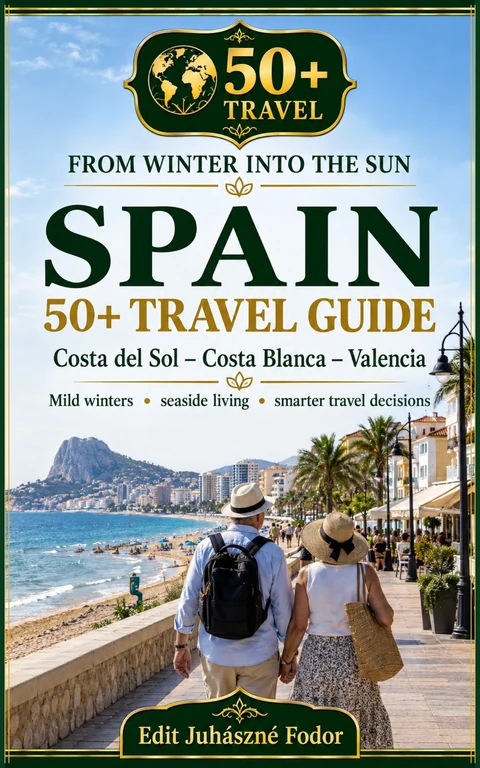
Spain 50+ Travel Guide is for independent travellers planning a stay of three weeks, one month or up to three months in mainland Spain. It helps you choose between three very different starting points — without treating a beautiful photograph as a complete travel plan.
Where should you begin looking?
Costa del Sol — for coastal towns and transport options. The Málaga–Fuengirola rail corridor makes several places worth considering without a car. But the station, town centre and beach may be at different levels. The exact apartment address matters.
Costa Blanca — for a choice of seaside towns with different characters. Alicante is a useful city base; Villajoyosa, Altea, Calpe and Benidorm offer different routines. Pay particular attention to older, hilly districts and the journey from your accommodation to everyday services.
Valencia — for a city first, and a beach as part of the wider picture. Culture, markets and local transport may be the draw. Compare districts carefully: a central apartment and a place near the shore can produce very different daily lives.
These are starting points, not guarantees. Neighbourhoods, buildings and local services should be checked for your own dates and needs.
A detail worth noticing before you book
In the book's Torremolinos section, one sentence captures why practical travel planning matters:
“Most importantly, being close to the station and being close to the beach are often two different things.”
That is a real excerpt from Chapter 10 of the guide. The book goes on to distinguish La Carihuela, El Bajondillo, Playamar and Los Álamos rather than treating Torremolinos as one interchangeable resort.
A short distance on the map can still mean steps, a slope or an awkward route with luggage. Before committing to a longer rental, it is worth knowing what an ordinary shopping day will involve.
What will the guide actually help you do?
Rather than just collecting attractions, it helps you work through the decisions involved in staying longer:
- Choose a base. Compare regions, towns and neighbourhoods, including transport, slopes and daily convenience.
- Question a rental. Check deposits, utilities, heating, access, contract details and the real journey to shops or public transport.
- Build a budget. Look at separate cost models for a solo traveller and a couple, and allow for an emergency reserve rather than relying on an advertised rent.
- Plan arrival and daily life. Think through airport transfers, car-free movement, medication, insurance and a practical backup plan.
- Set a comfortable pace. Use sample plans for three weeks, one month or three months, including time to settle in instead of moving constantly.
The guide also includes practical Spanish, official-source references, a pre-departure checklist and an emergency card.
Who is it — and isn't it — for?
This book is a strong fit if you are considering an independent, longer stay in Costa del Sol, Costa Blanca or Valencia, especially if walking distances, transport and accommodation details matter to you.
It is not a complete guide to every part of Spain, a two-day city-break itinerary, or a substitute for personalised immigration, legal or medical advice. Prices, timetables, regulations and services change; confirm important details with current official sources before making commitments.
Choose a place that works beyond the first sunny afternoon
The right base may not be the one with the most dramatic view. It may be the one where you can live comfortably, manage your budget and enjoy the small routines that fill an ordinary week.
Still comparing countries? Read Thailand vs Spain in Winter for a broader comparison before choosing your destination.
Considering Valencia? Try the Valencia Central Market morning itinerary, with a shorter route, a café stop and an optional extra.
Found a promising apartment? Work through these long-stay accommodation questions before committing to a booking.
Which Spanish coast works better for a winter stay? Compare Alicante and Fuengirola for daily travel, winter comfort and useful local facilities in Costa Blanca or Costa del Sol in winter?.